
Some of the first records of cancer came from Ancient Egypt. Several documents described the removal of mysterious breast tumors spreading through the patients’ bodies. The Egyptian world took note of one thing: there was no working cure. Thousands of years later, the medical world is still searching for one. A treatment capable of destroying cancer without harming the patient. A treatment we could give to people as a preventative measure, like a routine tuberculosis vaccine. A treatment that we can count on working. Modern studies have revealed a promising cure: genetic therapy.
Gene therapy focuses on, well, your genes. Your genes are made of DNA, which determines all of the traits that you inherit from your parents. They’re made of tiny little building blocks we call nucleotides, represented by the letters C, G, A, and T. The sequence of these nucleotides is what causes different traits. For example, the sequence CGATAT may give you brown eyes, and the sequence CGTATA may give you blue eyes. Mutations in DNA sequences can cause several diseases, such as some types of cancer. Gene therapy cures these illnesses by turning off or replacing diseased genes with healthy ones.
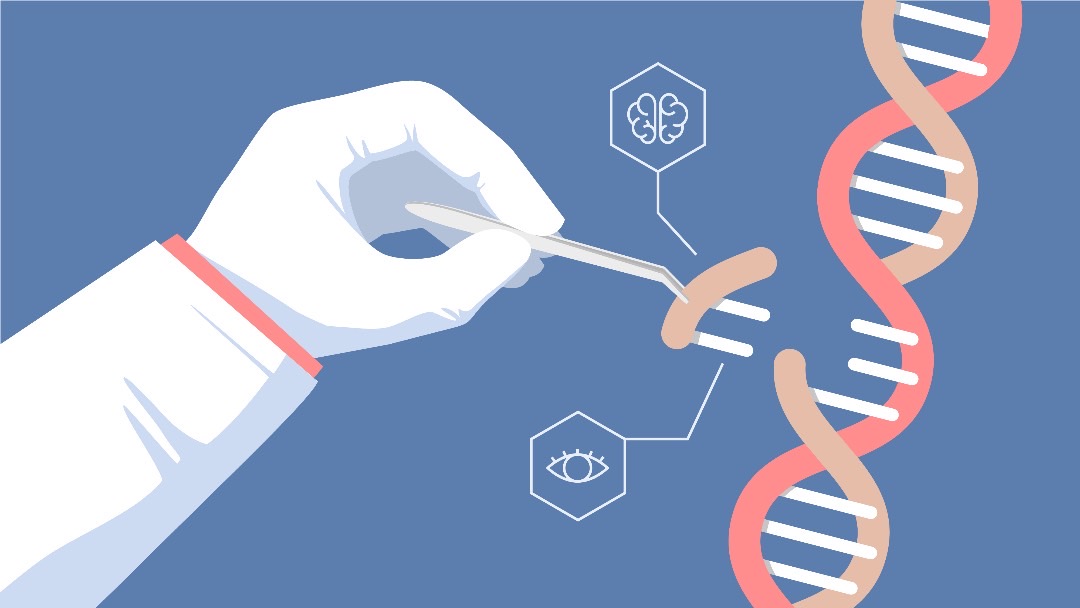
Gene therapies can be additions, edits, or silences of diseased genes. Additions insert a working copy of the gene into the body. The working gene then multiplies and replaces the diseased gene, curing the patient. Gene edits are slightly different. Using special molecules, geneticists can cut out the diseased parts of the gene and change them. The last type of genetic therapy silences a gene. This turns the gene off (so it can’t affect the body), rather than replacing or fixing it.
Gene therapies are still fairly new. They can only be used for a limited number of disorders, like sickle cell anemia, certain cancers, hemophilia, immunodeficiencies, retinal blindness, and neuromuscular diseases. And, even within this limited number of gene therapies, high costs, low availability, and some harsh side effects become additional barriers to getting treated. Common side effects of gene therapy include immune system reactions, infections, and damage to healthy cells. In some cases, gene therapy can create errors in DNA sequences, which can actually cause cancer.
The Process
Gene therapies are relatively simple to administer. Genes can be edited inside or outside the body. Ex vivo, or outside the body, editing works by removing a DNA sample. This may be blood or a piece of bone marrow. Then, a geneticist injects your cells with the desired gene. The cells with the new genes are inserted back into your body, introducing your body to the desired gene. This allows for the replication of the new gene and, hopefully, the replacement of all of the diseased genes.
Another option is in vivo therapy, where the vector is injected directly into the body. In this case, a sample wouldn’t have to be taken out and sent to the lab. It’s considered the more efficient choice. Researchers have studied using in vivo gene therapy as a treatment for genetic cancer that doesn’t harm non-cancerous cells.
CRISPR-Cas 9
If gene therapy is writing, then CRISPR is the pen. CRISPR stands for Clustered Regularly Interspaced Short Palindromic Repeats. To put it simply, CRISPR are chunks of DNA, commonly found in bacteria and archaea, that are used to edit genes. CRISPR works with a Cas endonuclease—a genetic material-cutting enzyme—to remove specific parts of the genes.
There are several Cas endonucleases. The most common Cas endonuclease is Cas 9. Cas 9 is able to break DNA into chunks with blunt ends, effectively removing it from a strand. Several variants of Cas 9 have been developed, making it one of the most flexible Cas molecules. CRISPR-Cas 9 has been approved for medical treatment.
Cas 12a is similar to Cas 9 in that it cuts out DNA segments. However, it does not do this bluntly; it leaves behind sticky ends, which hang over the ends and allow for reattachment. Additionally, Cas 12a is simple and small. This makes it a great option for insertion through AAV (adeno-associated viruses). Cas 3 shreds DNA chunks into single strands, rather than cleaving them off. It’s used to wipe out long stretches of DNA. Cas 14 targets single strands of DNA, and is as small as Cad 12a. It’s best used to find small, specific DNA mutations.
However, none of these Cas molecules can edit RNA. Editing RNA can have some benefits over editing DNA, but is harder to accomplish as the adaptable Cas 9 can’t be used. Cas 13 is an RNA-targeting Cas molecule. With the capability of cleaving single strand RNA, Cas 13 can target mutations before proteins are created (expressing the genes). Cas 7-11, a fusion of Cas 7 and 11, also targets single stranded RNA. Unlike Cas 13, it doesn’t cleave nonspecific (other) RNA.
The potential of gene therapy is astronomical. It’s a treatment that could stop cancer at the source. CRISPR alone opens up several opportunities for medical advancement. Further research into gene therapy may show how it can be applied to even more genes, how different Cas molecules can create different effects, and how gene therapy may change the way we see genetic diseases forever.